
 Bob Forman, MS, GFI, CFGS, CAFS, a two-time Golf Fitness Association of America (GFAA) On-Course Award Winner and 2024 GFAA Recognition Award Winner, is an Exercise Physiology Certified Golf Fitness Instructor, Speaker and Author.
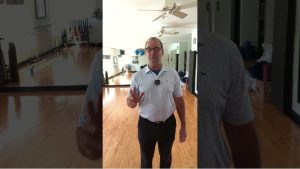
Bob Forman on the importance of looking at your thumbs for better performance:
Stand in front of a full-length mirror with your arms hanging down naturally at your sides. Take a look at your thumbs. How are they facing? Are they pointing straight ahead or are they rotated in? If more of the latter, it could be negatively affecting your golf swing and playing performance. Thumbs that are rotating inward are usually the result of rounded shoulders, which tends to be very common these days due to computers, cell phones and any activity that has you hunched over. Rounded shoulders are not good for your golf game, nor are they good for your health. A rounded shoulder posture will more than likely affect your set-up when addressing the ball. Typically, the golfer presents with what is known as a C-posture, which is characterized by a bowed or rounded spine. When viewed from down the line, the golfer’s upper body forms a C, hence the name. C-posture at address can result in several swing issues, like a limited backswing that impacts clubhead speed and decreases yards down the fairway. To enhance the backswing when in a C-posture, the golfer will have to stand up while taking the club back. This dynamic posture can alter the swing plane, which in itself has issues such as mishits. A second concern is a reduction in external shoulder rotation of the trail shoulder. This adds to a limited backswing and could also send the golfer into a reverse spine, which is characterized by a leaning back of the torso toward the target. A reverse spine does not set the golfer up for a productive downswing, as the upper body tends to take over, often causing a casting of the club and an over-the-top swing plane. The result is usually a weak slice and a frustrated golfer.
Bob Forman on the business impact of looking at your thumbs for better performance:
Ideally, the golfer should try to maintain the spine angle developed at address throughout the backswing. This secondary spine angle, produced by the trail hand being placed lower on the club, has the golfer leaning slightly away from the intended target. By maintaining this secondary spine angle throughout the backswing, the golfer has a much greater chance of initiating the downswing in the proper swing sequence, initiated by the hips versus the upper body. A rounded posture can lead to shoulder discomfort as it places the supraspinatus (part of the rotator cuff) tendon at risk for impingement. Pain associated with lifting of the upper arm straight out to the side is a common symptom. Another health concern of the shoulders rounding is the crowding of the heart and lungs in the chest cavity, which can impact their efficiency. The body adapts to the position that it’s placed in most of the time. If you spend a lot of time sitting in front of a computer or are hunched over an individual in the dentist’s chair, as an example, you are shortening and tightening the muscles across the chest and shoulders while concomitantly elongating and weakening the muscles that connect the shoulder blades to the spine (rhomboids). If not corrected, gravity will, over time, continue to pull the shoulders forward. To correct this misalignment, you’ll need to stretch the tightness and strengthen the weakness. Here’s a great combo exercise that will focus on both areas and is easy to do anywhere – the Posture Exercise.
Another good exercise is the Shoulder Pinch done while lying on a stability ball or on a foam roller. Place your arms out to the side with elbows bent at 90 degrees. Engage the rhomboids by pinching or squeezing the shoulder blades together. This will also stretch the muscles across the chest and shoulders. Hold for 10-15 seconds and release. Repeat 5-10 times. Remember to breathe!
If you would like to email the author of this Best Practice directly, please email bob@golfitcarolina.com.