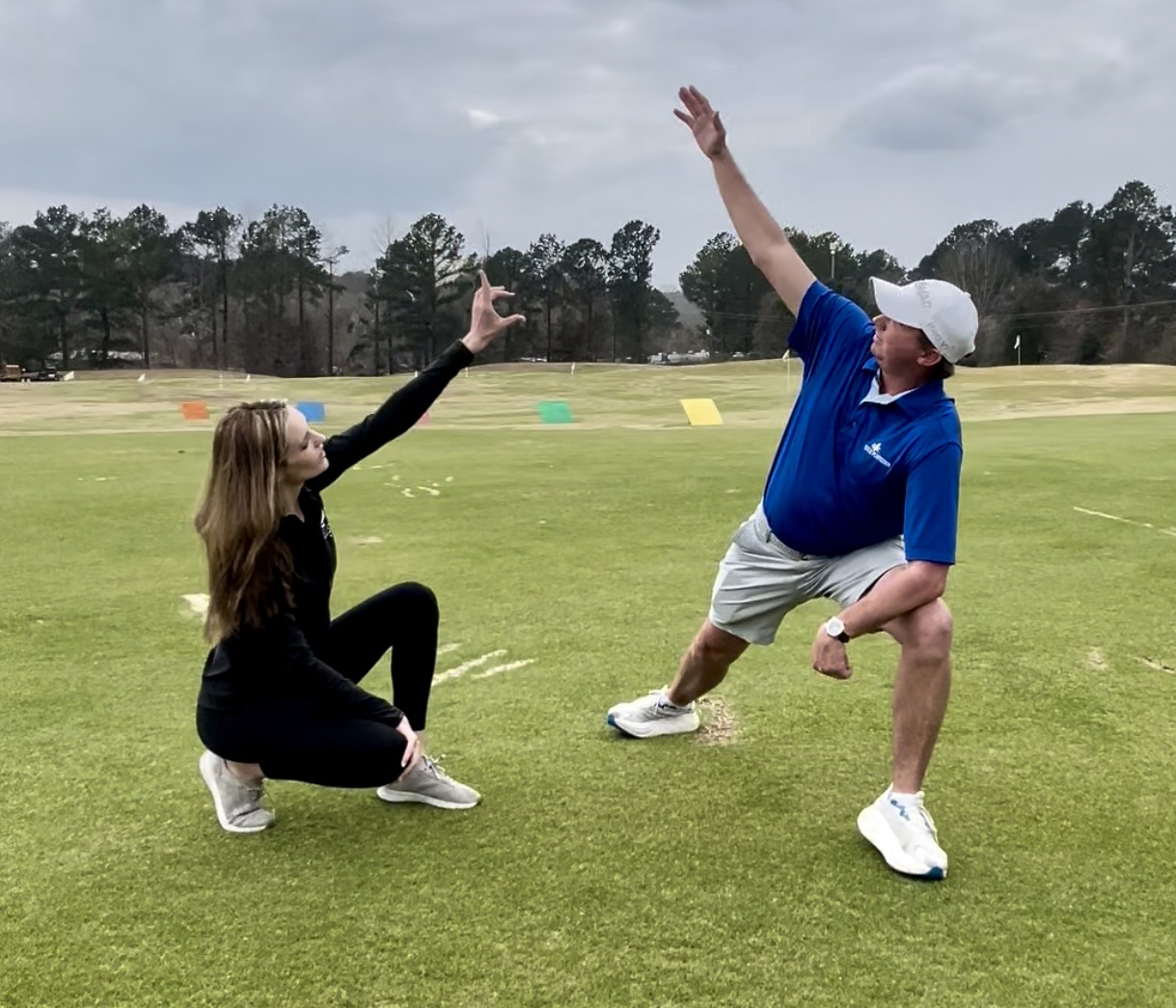
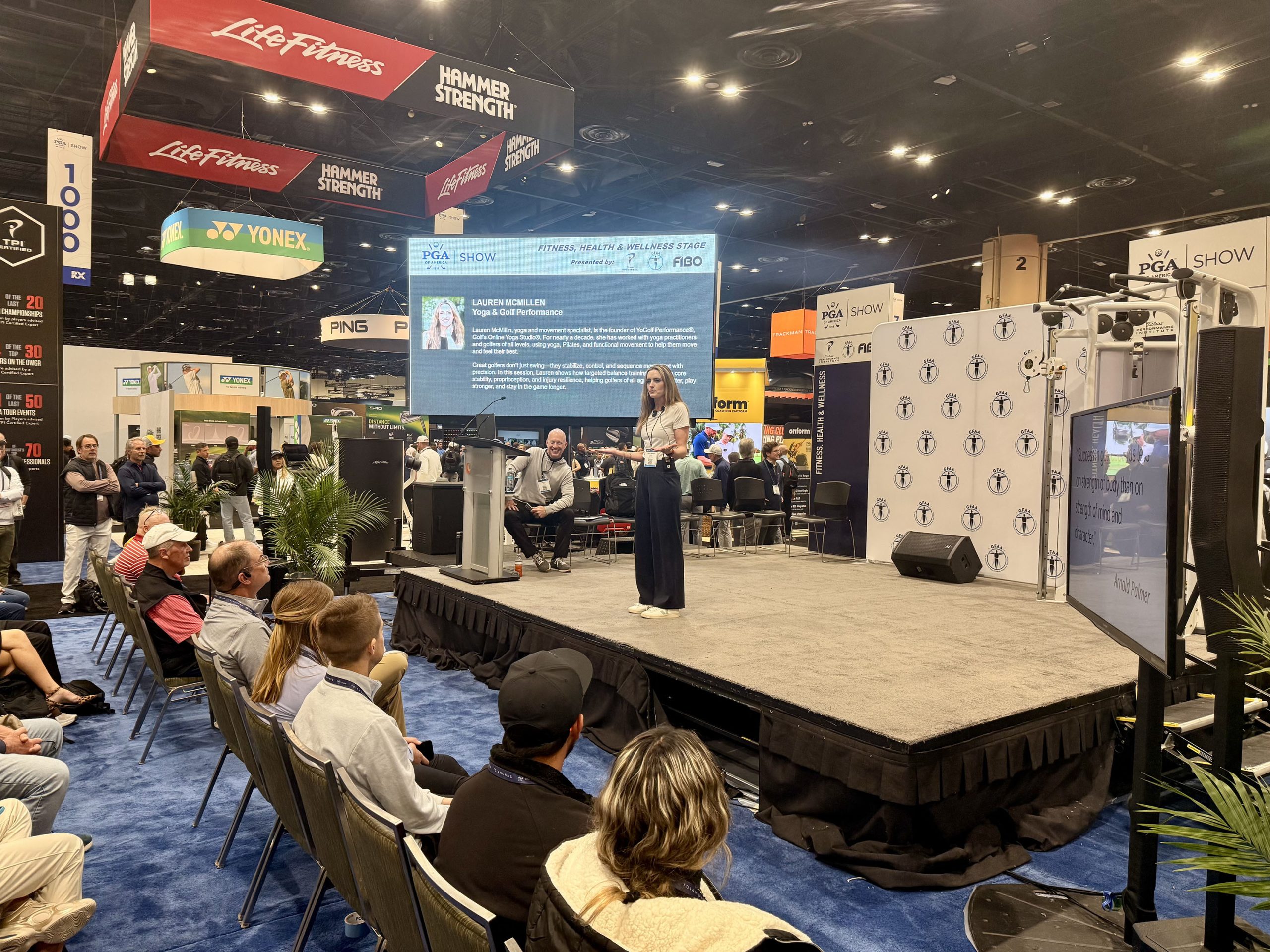
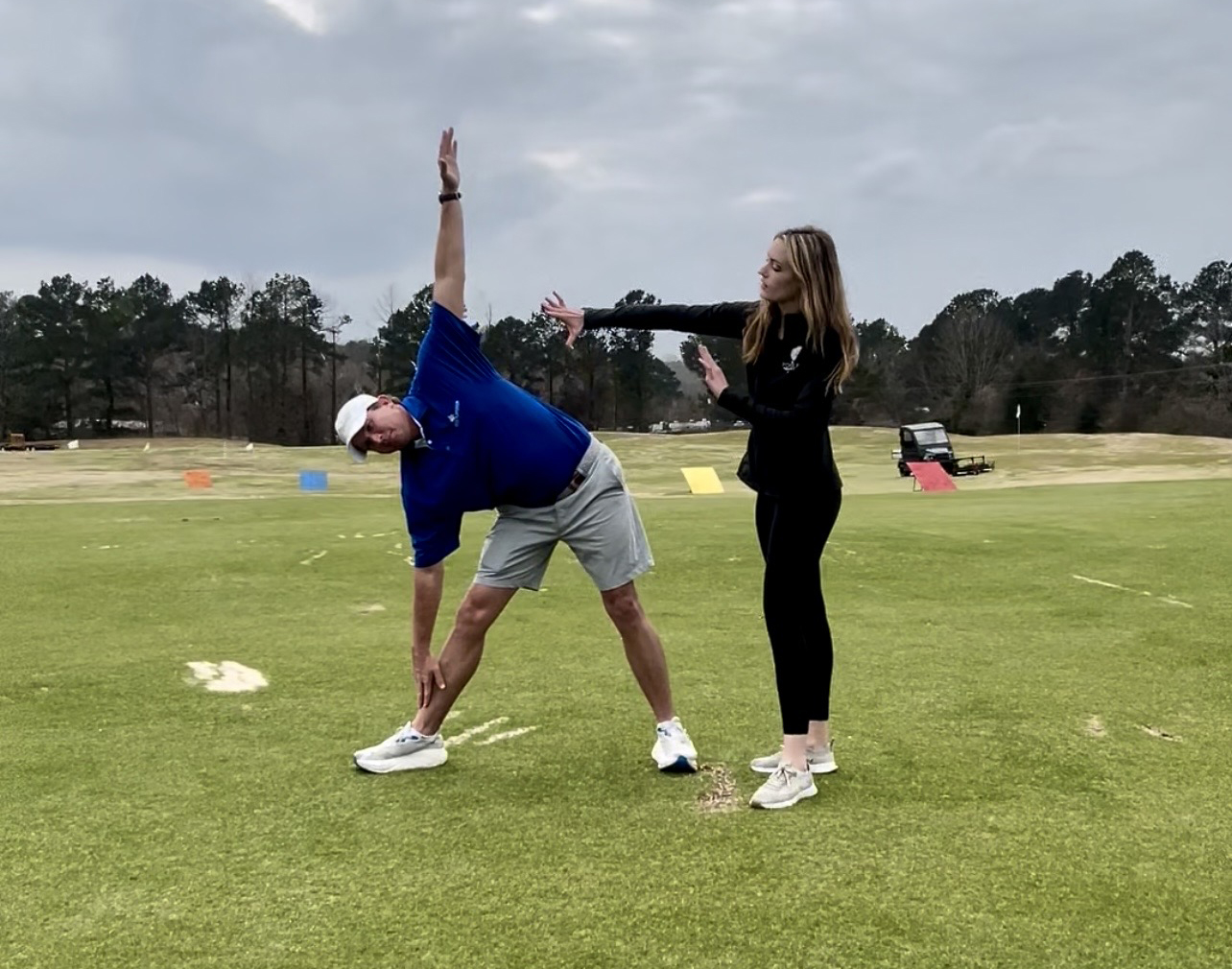
 Lauren McMillin, a yoga and movement specialist, is the founder of YoGolf Performance®, Golf’s Online Yoga Studio®. For nearly a decade, she has worked with yoga practitioners and golfers of all levels, using yoga, Pilates and functional movement to help them move and feel their best. In addition to being featured in articles for Golf Digest and PGA.com, Lauren has been a recurring speaker at the PGA Show and at regional PGA events, and is co-author of The Ultimate Golf Fitness Program.
Imagine building a skyscraper on a shaky foundation — or planting a tree without roots. That’s your golf swing without balance.
While golfers often focus on technique, power or flexibility, the game’s greats know that balance is essential.
Tiger Woods once said, “One of the least discussed but most important elements of the full swing is balance. Not only is a balanced swing nice to look at, it’s critical to good ball striking.”1
Jack Nicklaus echoed this sentiment: “Whenever I came back to golf after a long break, I’d always focus on the basics, which includes balance. Having good balance translates to feeling relaxed and centered, and it allows you to shift your weight comfortably through your swing.”2
Even Tiger, teaching his son Charlie, pointed to Rory McIlroy as an example: “Have you ever seen Rory off balance on a shot? No. Not ever. You can swing as hard as you want, but you need to have balance.”3
You might not become the next Tiger, Jack or Rory — but what if improving your balance could transform your game?
Understanding Your Joints
Balance begins at the skeletal level. According to Gray Cook and Michael Boyle’s joint-by-joint approach, the body’s major joints alternate between mobility and stability — and it all starts from the ground up.4
The lower body — feet, ankles, knees and hips — forms the foundation of both balance and power:
- Feet: Create your foundation and provide constant feedback to your brain about balance and pressure through the ground.
- Ankles: Absorb forces and allow for proper mobility to support your stance and movement.
- Knees: Provide stability while allowing controlled bending and extension.
- Hips: The primary power source, moving in all three planes — flexion/extension, lateral movement and rotation.
Weakness or stiffness in any of these areas can lead to inconsistent shots, reduced power and even injury. Over time, these compensations can also create inefficient movement patterns that are difficult to correct without addressing the root cause.
Balance Tip: Begin with single-leg balances, paying attention to knee alignment and maintaining a slight bend in the knee. This helps engage the quads and hips, allowing energy and power to flow more efficiently through the lower body.
Vision and Proprioception
Balance isn’t just physical — it’s sensory. Proprioception, your body’s innate ability to sense where it is in space, and kinesthesia, your sense of movement, allow you to feel the club at the top of your backswing or the position of your leg in a lunge without looking.
Alongside these systems, a frequently overlooked factor is vision. Your eyes provide critical feedback that helps your body maintain equilibrium. If you’ve ever tried standing on one leg with your eyes closed, you know how quickly balance becomes a challenge.
The takeaway? Your eyesight plays a major role in your overall stability.
Balance Tip: Focus on a single point — such as the golf ball — to help maintain balance. A steady gaze stabilizes your body and sharpens concentration.
Implementing Balance Training
As we’ve seen, balance begins at the feet — and so should your training. The soles of your feet contain roughly 200,000 sensory receptors that communicate with your brain. Constantly wearing socks and shoes can dull this feedback, weakening foot and ankle strength over time. When possible, spend time barefoot, even if it’s just around the house.
Next, think of your foot as a tripod, with equal weight distributed through the heel, big toe and pinky toe. These three points create a stable base of support. From there, focus on “using the ground” to generate force from your feet up through the body and into the club — a concept known as ground reaction forces. This is what helps translate stability into power, leading to longer drives and more controlled swings.
Balance Tip: Try a Chair Pose (or golf stance). From standing, bend into your knees and hinge at the hips as if sitting into a chair. As you return to standing, focus on actively pressing your feet into the ground.
If you’ve made it this far and feel like you — or your students — have poor balance, take heart. Improvements in balance rely heavily on the brain’s ability to process sensory input, meaning they don’t require added muscle mass or extreme flexibility. In fact, balance is often one of the first areas to improve when starting a golf fitness program.
If you want to go deeper, key muscle groups include the deep abdominals, glutes and back — but always start with the fundamentals:
- Mobilize the ankles
- Stabilize the knees
- Mobilize the hips
- Keep a slight bend in the knees during balance work
- Focus your eyes on a single point
- Activate your foot tripod and “use the ground”
Master these principles, and you’ll see improvements not only in your balance, but in the consistency and power of your golf swing.
References:
1 Tiger Woods: A matter of balance, Golf Digest, June 3, 2008.
https://www.golfdigest.com/story/tigertips_gd0807
2 Jack Nicklaus on X: @jacknicklaus, May 1, 2020.
https://x.com/jacknicklaus/status/1256274908482613248
3 Peak Tiger’s swing vs. Rory’s: Whose is a better model to emulate? Zephyr Metlon, December 9, 2022.
https://golf.com/instruction/top-100-teachers-break-down-tiger-rory/?srsltid=AfmBOopWtkGRo5HA6HE8FOePJCyxvNttysYPf7xfD68zeNQf_Ih1qNWw
4 Advances in Functional Training Excerpt, Mike Boyle, On Target Publications.
https://www.otpbooks.com/advances-in-functional-training-excerpt/